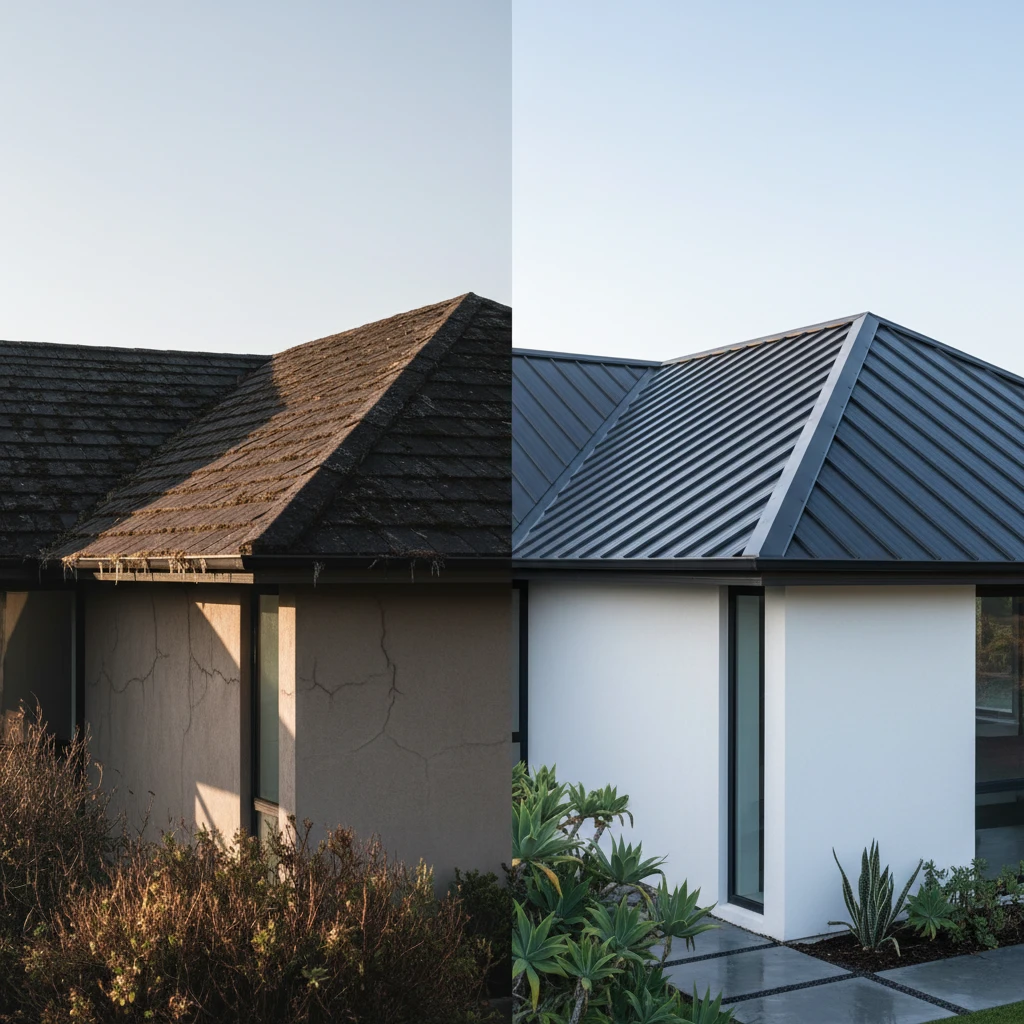

Most roof failures don’t happen overnight. They develop over months or years through a combination of material degradation, weather damage, and deferred maintenance. Knowing what to look for can be the difference between a $500 repair and a $15,000 replacement.
Granule Loss in Gutters: Asphalt shingles are coated in mineral granules that protect the asphalt layer from UV damage. When you start seeing significant granule accumulation in your gutters, your shingles are in the final stage of their life. This is a reliable indicator that replacement is within 2–5 years.
Curling or Cupping Shingles: When shingle edges turn upward (curling) or the center rises while edges stay flat (cupping), the shingles are no longer lying flat and are vulnerable to wind uplift and water intrusion. This typically indicates a ventilation problem and/or end-of-life shingles.
Daylight Through Roof Boards: If you can see daylight through your attic, water and pests can too. Any visible gaps between roof boards require immediate attention.
Dark Stains on Interior Ceilings or Walls: Water staining doesn’t always appear directly below the entry point — water travels along rafters and sheathing before dripping. A professional thermal imaging inspection can trace the path from stain back to source.
Missing Flashing: Flashing is the metal trim around chimneys, skylights, vents, and wall junctions. Failed or missing flashing is responsible for a significant percentage of residential roof leaks. Inspect these transition points annually.
When in doubt, schedule a professional inspection. Our team provides free inspections and written reports within 24 hours.